Your butternut is quietly feuding with your apples
If your squash never lasts as long as promised, we suspect the culprit is quietly exhaled in the same cool corner.
Cure first, then keep it cool
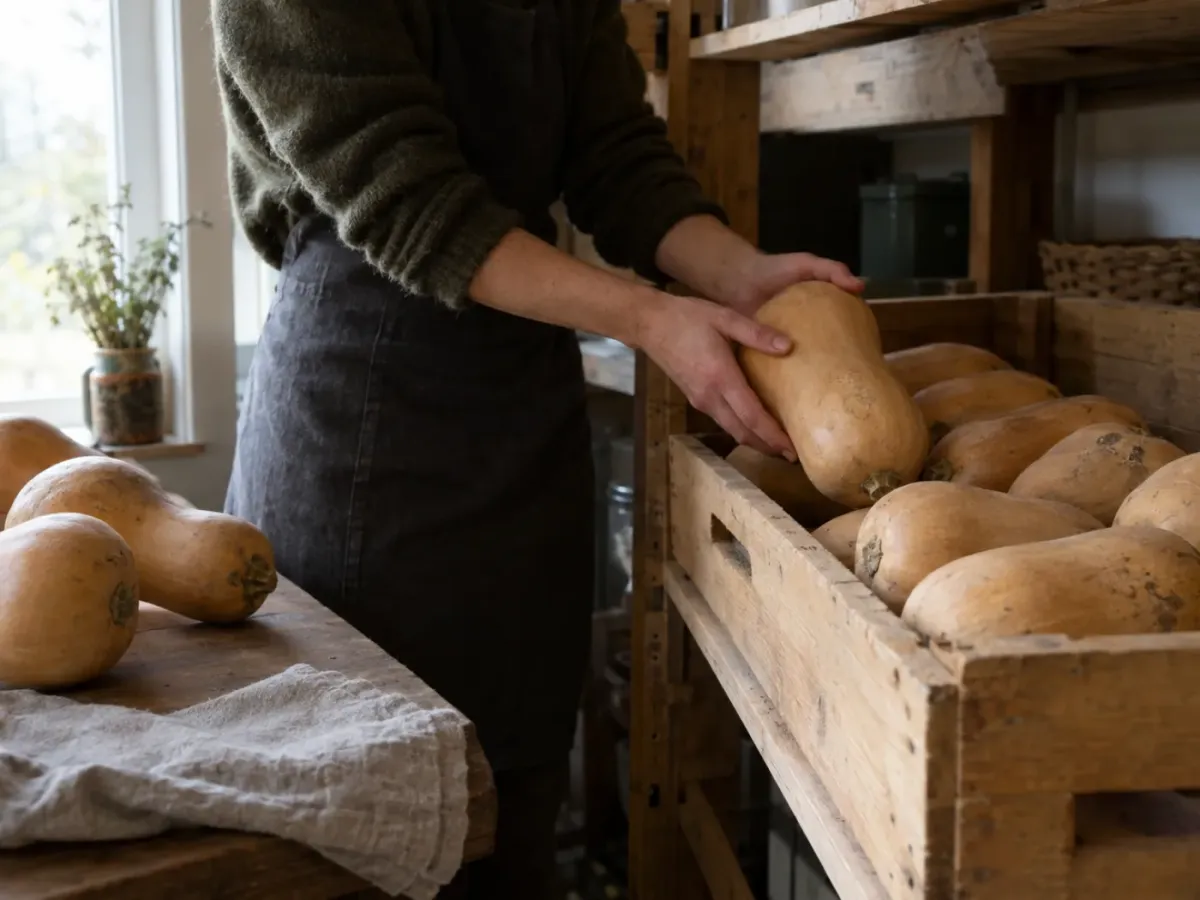
Iowa State's extension says to cure winter squash, except acorn types, at 80 to 85°F with 80 to 85% relative humidity, which hardens skins and heals cuts. Acorn squash skips the cure entirely, because high temperature and humidity actually reduce its quality and storage life. After curing, store squash somewhere cool, dry, and well ventilated at 50 to 55°F. Properly stored, acorn keeps about 5 to 8 weeks, butternut 2 to 3 months, and Hubbard 5 to 6 months.
The fruit bowl problem
Here's the surprising part: ripening fruit releases ethylene gas, which shortens squash storage life and makes potatoes sprout, so Iowa State says do not store squash near apples, pears, or other ripening fruit.
Share the surplus
Cured squash stores for months, so if your harvest outgrew your counter space, you're in good company. University of New Hampshire Extension says unwashed produce is safe to donate: gently remove excess soil, and oddly shaped fruit is fine, as long as there's no mold, spoilage, bruising, or insect damage. Use clean hands or gloves and clean containers, and skip anything home-canned, since food pantries cannot accept home-canned fruit, vegetables, jams, jellies, or pickles. Worried about liability? The federal Bill Emerson Good Samaritan Food Donation Act protects good-faith donors. Or keep it simple and hand an extra squash over the fence.
Your zone
- Zones 3-4: University of New Hampshire Extension says unwashed produce with no mold, spoilage, bruising, or insect damage is safe to donate.
- Zones 5-6: Iowa State's extension pegs cured squash storage at 50 to 55°F in a cool, dry, ventilated spot.
Bottom line
- Cure squash except acorn types, then store everything at 50 to 55°F in a cool, dry, ventilated spot.
- Ethylene from ripening fruit shortens squash life and makes potatoes sprout, so keep squash away from apples, pears, and other ripening fruit.
- Donate extras unwashed but unblemished, in clean containers, never home-canned.
Sources
- "Storing Winter Storage Vegetables," Iowa State University Extension Yard and Garden, https://yardandgarden.extension.iastate.edu/how-to/storing-winter-storage-vegetables, last reviewed January 2025
- "Important Food Safety Information for Donating Produce to Food Pantries," University of New Hampshire Extension, https://extension.unh.edu/blog/2024/06/important-food-safety-information-donating-produce-food-pantries, June 4, 2024
This week: set aside clean, unblemished extras for a neighbor or a food pantry.
Photo: generated with AI.
