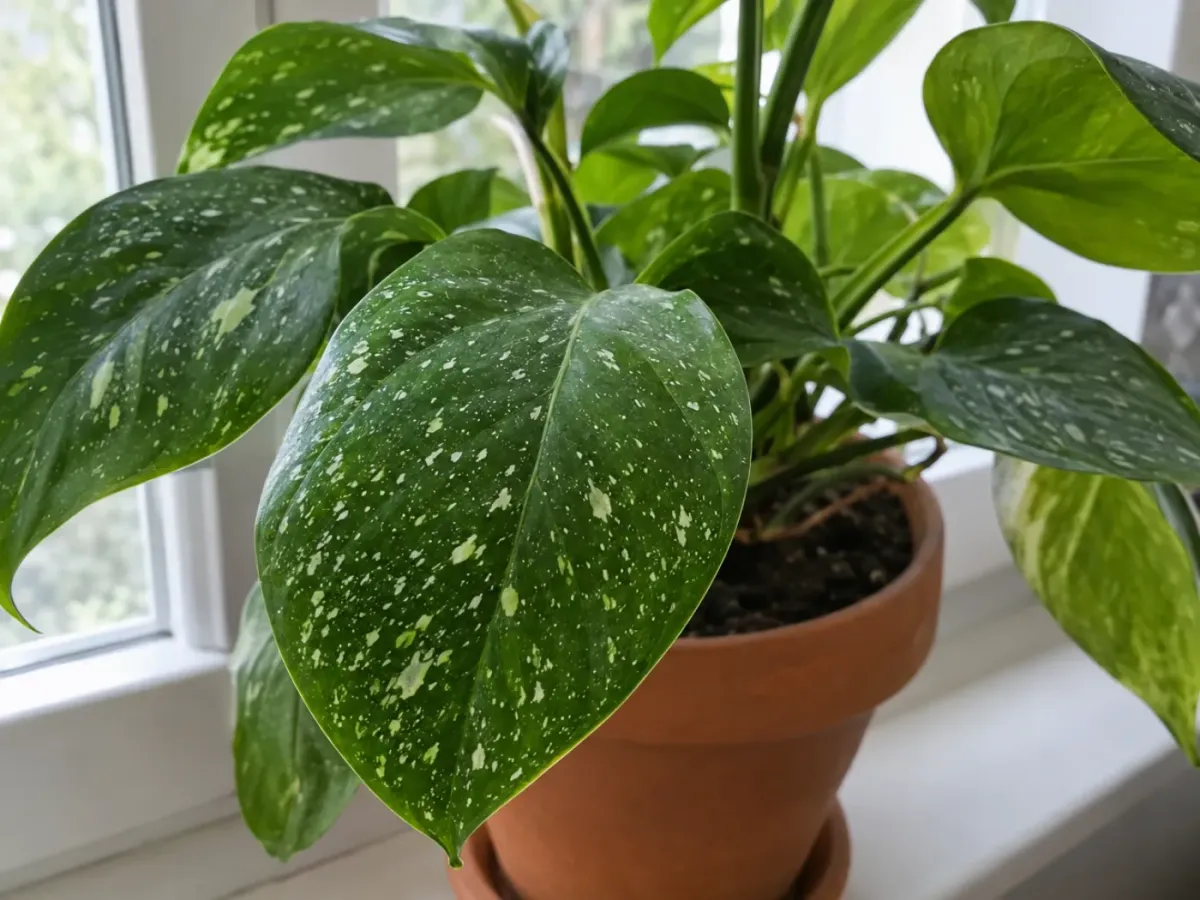
Speckled houseplant leaves? Meet the spider mites
Those pale speckles on your houseplant leaves are not dust. They're dinner.
What those speckles are
Light infestations speckle foliage with tiny yellowish-green spots; heavy ones turn leaves greenish-yellow, then tan or brown, until leaves drop. Look closely and you may find very fine webbing on leaves and stems, because the mites themselves are tiny and hard to see. Winter is when many of us first notice them: dry indoor air favors spider mites, and the two-spotted spider mite thrives in warm rooms with low humidity.
Start with water, not the spray bottle
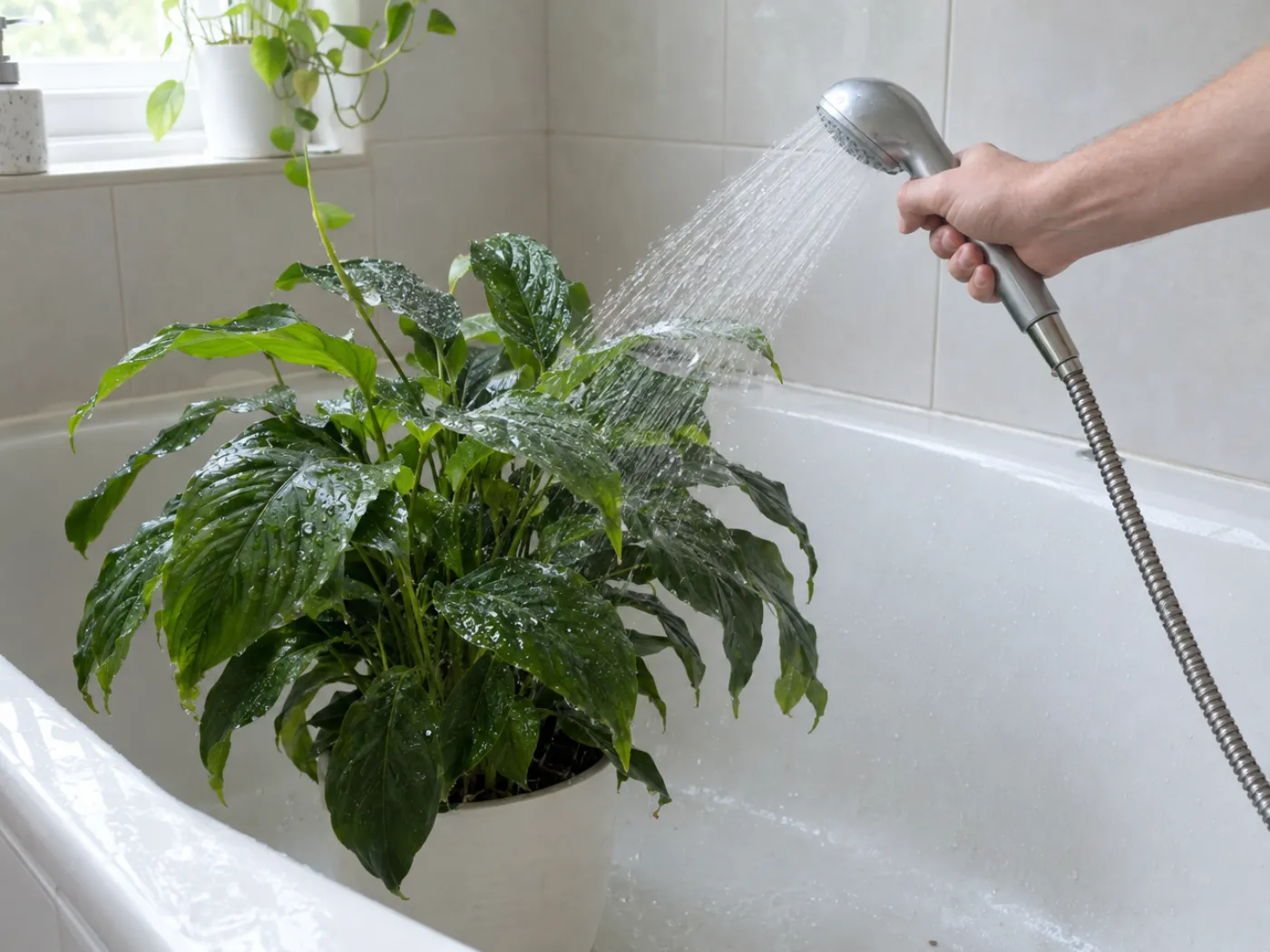
First, confirm the culprit. Gently shake a stem over a sheet of white paper and watch for tiny moving specks. Then move the plant to the bathtub or shower and blast it with forceful water, top and bottom of every leaf; washing like this can reduce light populations. Keep the newcomer quarantined for a few weeks in a humid spot, such as a bathroom, away from your other plants. If one small plant is heavily infested, it is often easier to discard it than to restore it, and you can prune badly infested parts off larger plants first.
If you reach for something stronger
Horticultural oils can treat some ornamentals, but Montana State says to identify the pest first, read the label to confirm indoor use, and test any product on a small section of the plant before treating it all. Badly infested plants may simply need to go.
Bottom line
- Speckles plus fine webbing points to spider mites.
- A shower blast and a humid quarantine beat chemicals for light infestations.
- Before any pesticide: identify the pest, read the label, test a small spot.
Your zone
- Zones 3-4: when nights drop into the 50s, bring plants in and inspect them; dry heated air seems to favor mites through winter.
- Zones 5-6: the same bring-in signal and the same winter watch.
- Zones 7-8: bring plants in around the first nights in the 50s, then quarantine newcomers for a few weeks.
- Zones 9-10: heating still dries the air, but nights may not reach the 50s on schedule.
- Zone 11+: the indoor dry-air conditions can still arise.
One thing to do this week: shake a suspect leaf over white paper and see what moves.
Sources
- Spider Mites on Houseplants, Iowa State Extension, Dec 5, 2007 (page notes information may not be most current)
- Houseplant Winter Critters, MSU Extension
- Moving Houseplants Back Indoors for Winter, UVM Extension, Sep 26, 2022
Photo: generated with AI.
